
Why I Love Artificial Intelligence Platforms
I'll save "Why I Hate Artificial Intelligence Platforms" for another day.

Apologies for the absence of essays since early July. I had some unexpected and magnificently successful orthopedic surgery and spent most of July engaged in rest, PT, and medical consultations. All is well, now.
Like the cinematic Wizard of Oz’s self-description, artificial intelligence (AI) platforms (e.g., ChatGPT, Grok, Gemini) are both great and terrible. Some other day, I’ll address the terrible parts (as I have in the past), but today I’ll focus on the parts of AI my technophile Dad would have loved.
DIAGNOSING AND REPAIRING MECHANICAL PROBLEMS
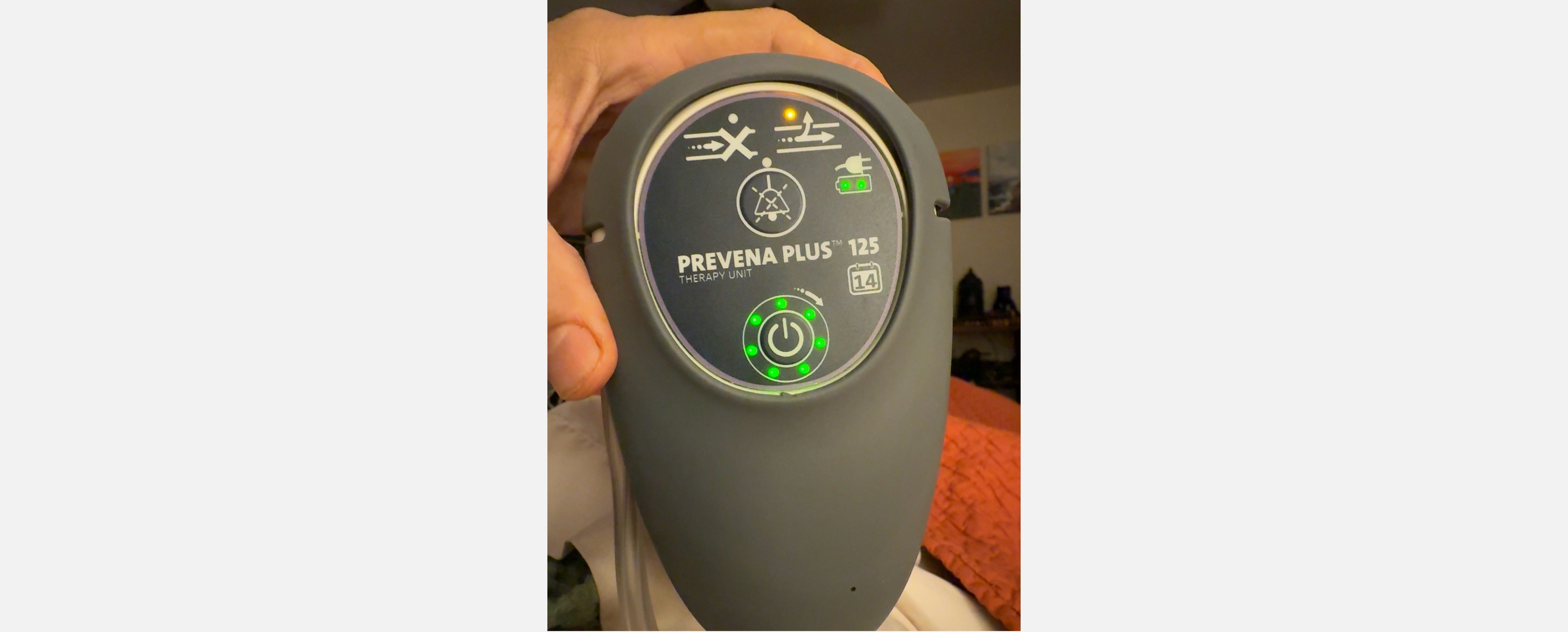
While recuperating from recent surgery, this medical device attached to me began beeping incessantly at around 2:00 AM, with a yellow warning light shining. Unsure of what to do and unable to sleep through the racket, I called the surgeon’s after-hours number for assistance. The nurse said she’d make calls and try getting back to me within an hour (which sounded like an eternity of beeping).
When we hung up, I took the above photo, copied it into ChatGPT, described the beeps, and asked what might be wrong. I didn’t state the device’s name or offer any info on its purpose. In seconds, the AI offered four possible problems and four possible fixes. None of the fixes worked, but together, they gave me an idea for a fifth strategy—which worked instantly. At around 2:30 AM, my surgeon called, and I was pleased to tell him that I had already solved the problem.
I’ve also successfully used AI for DIY repairs on auto brakes, Bose speakers, a refrigerator water dispenser, and my central air conditioning system. These problems might have been solved via Google or slogging through ponderous owners’ manuals. But traditional search engines often require far more precise queries and search strategies and manuals are unreadable. And in all these cases, I avoided paying for repairs—and the delays involved in obtaining service.
CREATING NOT-GREAT, BUT GOOD-ENOUGH ARTWORK

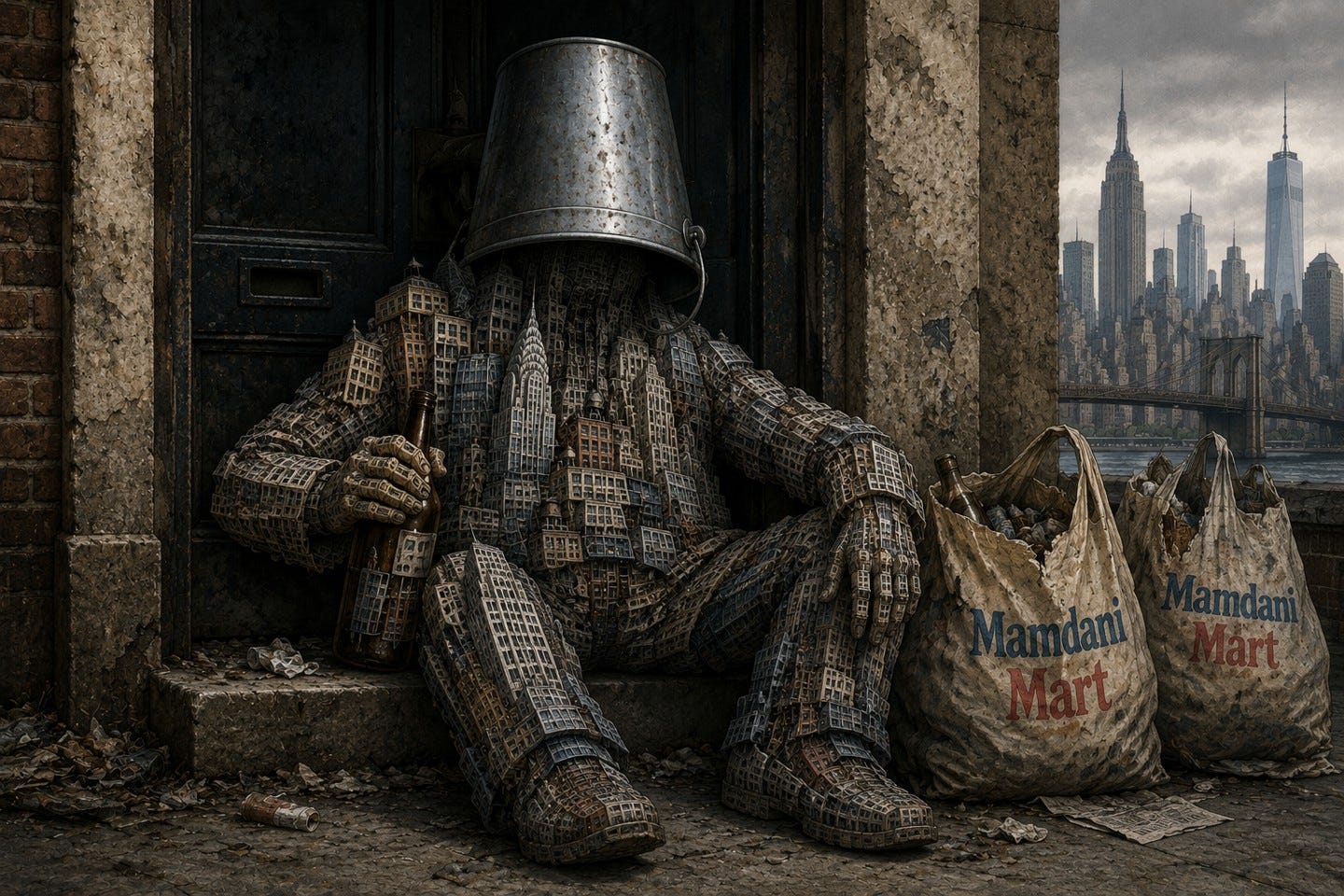
I like illustrating my blog with thematically appropriate artwork, and I regularly generate graphics on AI platforms for that purpose. Here, for a future piece, is my representation of New York City, which has proven itself sufficiently venal and blinkered to elect a smug, hate-filled, unaccomplished, unscrupulous, economically illiterate nepo-baby as its mayor. My first ChatGPT query was:
“Give me a cartoon of the City of New York … [con]figured so it is in the form of a human twisted about so it has its head up its ass.”
The output was so-so, so I altered my request. After three visuals not to my liking, up popped this anthropomorphic representation of the city—body composed of iconic buildings, seated like a down-and-outer in a filthy doorway, voluntarily blinded by the bucket over its head, drinking mephitic rotgut, and toting grimy bags from Mayor Mamdani’s soon-to-fail Soviet grocery stores. (I decided to save Mamdami’s hatred for Israel and gushing camaraderie with outright Jew-haters for another image on another day.)
Some denigrate such output as “AI slop,” but I like it because it’s quick, costless, and precise in design. Sorry, artists, but I don’t have the time, money, or patience to hire you to do this work.
VALIDATING PRECISE, OBSCURE, HARD-TO-BELIEVE ANECDOTES
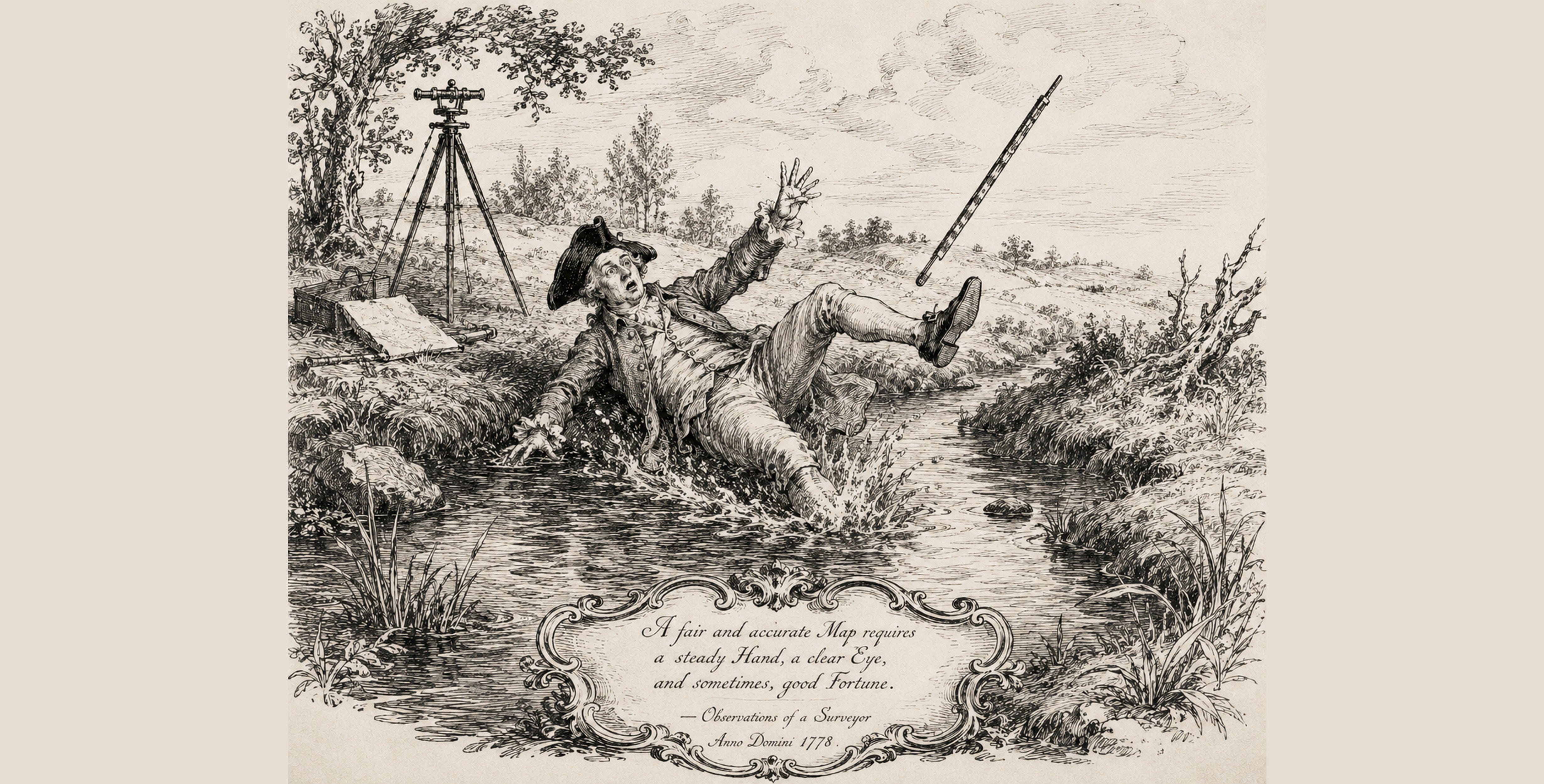
Fifty years or so ago, a friend worked for Virginia’s Highway Department and told me he had seen a map showing a small body of water in Lunenberg County called—excuse the obscenity—“Fucking Creek.” The other day, I wondered whether his tale had any validity. I asked ChatGPT, purposely omitting any mention of Lunenberg County, as I didn’t wish to give the platform sufficient information to fabricate a false story.
After I posted my query, up came a long response, beginning by assuring me that the story is true and that the creek was located in—drumroll—Lunenberg County. Instant validation of my friend’s long-ago claim. It explained that the creek was so named in the 1700s, when vulgar humor was quite in vogue. The name apparently appeared on local land deeds at the time. ChatGPT mentioned another nearby stream whose name was even more vulgar. (You look it up for yourself.) Apparently in the 19th century, “Fucking Creek” was renamed “Modest Creek” after Victorian sensibilities settled over Virginia. ChatGPT’s output suggested a few reasons why the creek might have been given its bawdy name. A half century ago, my friend speculated that it might have been named by a surveyor who fell into the creek. I asked ChatGPT to produce a graphic showing that possibility, and you’ll find the picture just above.
FINDING AND IDENTIFYING THE DIFFICULT-TO-FIND-AND-IDENTIFY
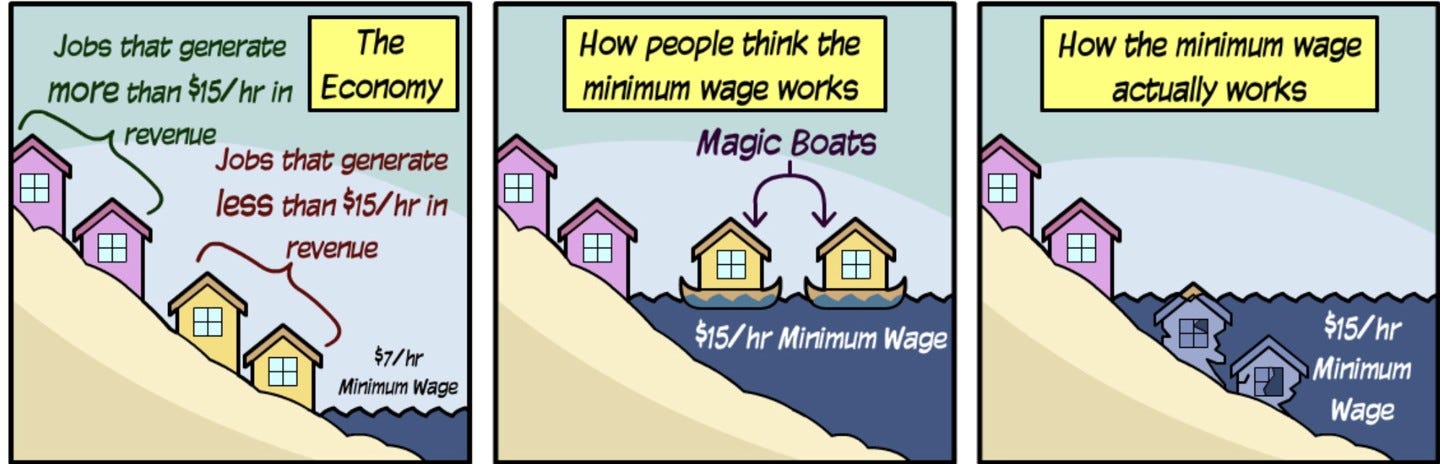
I recently thought of a long-ago cartoon that perfectly illustrated the illogic and destructiveness of minimum-wage laws. But I couldn’t find a copy and had no idea when or where it originated. I described the image in an AI platform and up came the above image. Then, I asked, “What is the origin of this cartoon?” The response suggested that it:
“appears to have originated with Red Panels, a cartoonist/illustrator who creates explanatory cartoons on economics and public policy. The earliest widely documented appearance I could find is from early March 2016, when economist Daniel J. Mitchell … featured it in a blog post titled ‘In One Cartoon Strip, Everything You Need to Know about the Minimum Wage.’ He explicitly credited it as ‘this cartoon strip from Red Panels.’ … Since then, the image has been widely reposted by free-market and libertarian websites, blogs, and social media, often without attribution.”
ChatGPT went on to say that the creator of Red Panels remains anonymous to this day and offered some theories that have circulated on the web.
I’ve also taken snapshots and asked ChatGPT or Grok to identify plants, items in my salad, birds and bugs, peculiar-looking mechanical devices, faces of obscure historical figures, buildings and city skylines, boats, cars, etc. Again, the AI platforms are, at times, unreliable and error-prone. But their answers are usually correct, and the answers are generally easy to fact-check.
ANSWERING VAGUE, MEANDERING QUESTIONS
What pleases me most is AI’s capacity for answering rambling, half-formed questions about remarkably obscure topics. Here are a few examples:

[1] Recently, a discussion concerning grilled cheese sandwiches reminded me of a kitchen implement my mother used for making scrumptious toasted sandwiches in the late 1950s and early 1960s. I asked ChatGPT:
“Thinking of a 1950s kitchen device. Two long handles, each ending in a metal disk. You held the disks over a stove to make crispy hot sandwiches.”
Up popped a discourse on long-forgotten mid-century toasting devices. Riffing on the answer, I posed one more brief query, and ChatGPT correctly identified the implement as a “Toas-Tite.” (Many mid-century brand names combined hyphens and misspellings, thus foreshadowing hip-hop orthography.) One more query (perhaps on Google) informed me that a replica, manufactured in recent years by Toas-Tite LLC in Virginia, is now available on Amazon for $36.95. Mine (shown above) arrived a few days later, and the smell of melted cheese now regularly pervades my home.
[2] I was recently discussing the peculiar, squeaky, rhythmic instrument one often hears in samba music, but couldn’t think of its name. I asked:
“What is the squeaky Brazilian instrument that makes hooting sounds.”
Immediately, I received a discourse on the “cuíca”—the Brazilian friction drum that is sometimes called a “monkey drum” because of the sounds it makes.
[3] I have an iPhone app (Spot the Station) that signals when the International Space Station is visible in a particular location and uses the phone’s compass and gyro features to show precisely where the ISS is in the sky. The app also tells the station’s distance from the viewer, height in the sky, length of time visible on a particular sighting, and closest location on earth. Recently, the ISS was remarkably bright and passed nearly straight overhead. When it emerged over the western horizon, it was directly over Wisconsin, and when it vanished from sight, it was near the Bahamas. I wondered how close it had come to us at the zenith and how often we would enjoy such a view. I asked ChatGPT:
“I am in Alexandria Virginia. Last night, the ISS was visible 83 degrees above the horizon. This means it was directly above spots not too distant from Alexandria. For me in Alexandria, about how often would the space station be visible and similarly high up in the sky?”
The AI platform explained that at its height that night, the ISS would have been directly over some spot 30 or so miles from my house. Further, it suggested that such a long, clear, bright view would probably happen only 1 to 3 times a year in Alexandria.
[4] Long ago, I read a fine article in Commentary in which arts critic Terry Teachout discussed the uniqueness of “Eleanor Rigby.” A string of Google searches failed to produce the article. So, I asked ChatGPT:
“I believe Terry Teachout once said that there had never been a popular hit similar to Eleanor Rigby.”
Up came a fine discourse on the unique qualities of the song, but not the article I wanted. I added:
“It was in Commentary. I believe he was arguing that “they don’t write them the way they used to” and that the rise of micro demographics meant that that the way the old hits were written was designed for mass heterogeneous audiences that no longer exist.”
Up came the link with “Why They Don't Write 'em Like They Used To” (Commentary, October 2005).

ELEANOR RIGBY COVER
While we’re on the subject of “Eleanor Rigby,” here’s a lovely jazz cover by saxophonist Joshua Redman—featuring pianist Brad Mehldau, who has become a favorite of mine of late.
Best part of your post: “All is well. Now”
From that same Joshua Redman album, his cover of Joni Mitchell's "I Had a King" is also very well done. And thank you for highlighting the "positive" side of this new techonology; far too easy to focus on the "negative".